




The annual meeting of the European Network to Cure ALS (ENCALS) took place in Madrid from June 24 to 26, 2026. The conference is one of the most important European forums for scientific exchange on amyotrophic lateral sclerosis (ALS) and brings together leading experts from research and clinical care each year.
At the ENCALS Meeting 2026, the Ambulanzpartner team presented the latest findings from digital health services research, which were developed in collaboration with various ALS centers in Germany. The focus was on research projects made possible by patient participation and digital data collection via the ALS app.
By regularly using the ALS app, patients actively contribute to ALS research—whether by digitally documenting the progression of their disease or by participating in scientific surveys. This data helps us better understand ALS and further advance care.
Platform Presentation on the Digital Tracking of Disease Progression in Advanced ALS
Clinical observations and scientific studies to date suggest that people with ALS were often very physically active. However, it has not yet been sufficiently clarified whether—and to what extent—intense physical exertion influences the risk of developing ALS.
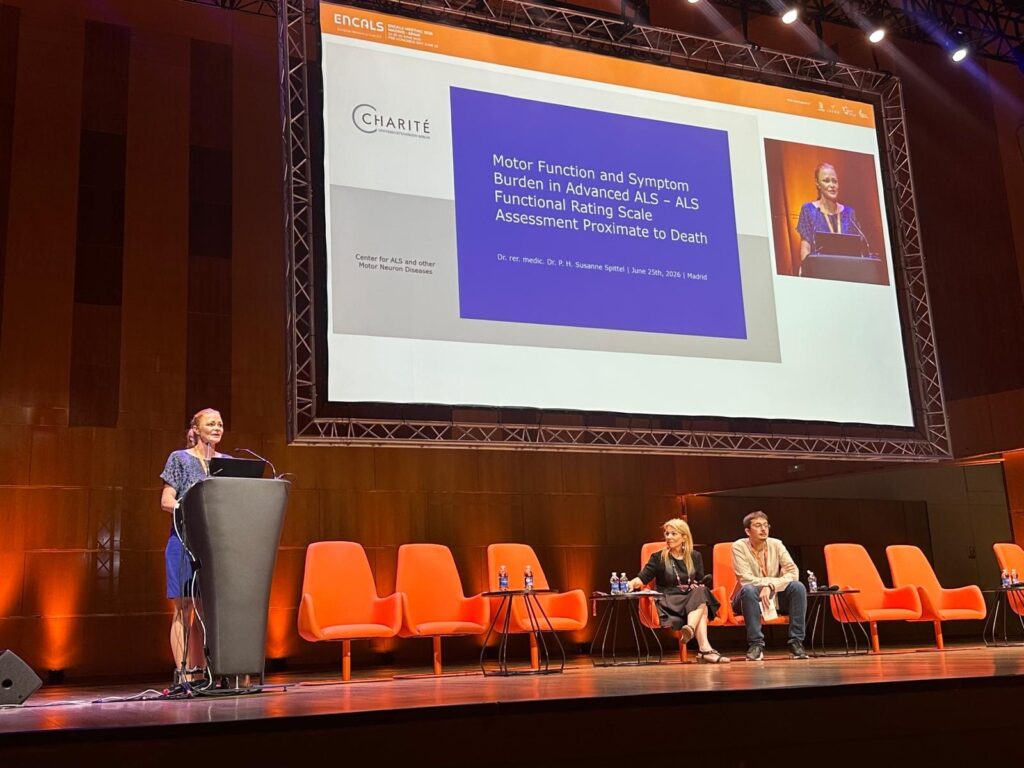

Under the title “Motor Function and Symptom Burden in Advanced ALS – ALS Functional Rating Scale Assessment Proximate to Death,” findings from the most comprehensive analysis to date of data from the ALS Functional Rating Scale in people with advanced ALS were presented.
The data show how motor impairments and symptoms develop during the final stage of the disease. The digital self-reports via the ALS app were particularly valuable in this regard: They supplement the data collected at the ALS Center and enable a more continuous and comprehensive picture of the disease’s progression—especially in the advanced stages of the disease.
The results highlight the potential and high
scientific value of digital longitudinal data. This data makes an important contribution to a better understanding of ALS and may also support the development and evaluation of new therapies in clinical trials in the future.
Poster presentation on the digital assessment of the effects of dextromethorphan/quinidine on bulbar symptoms
Marie-Thérèse Henke presented the latest findings on the digital recording of symptoms and treatment experiences among people with ALS who have received dextromethorphan/quinidine (DMC) therapy.
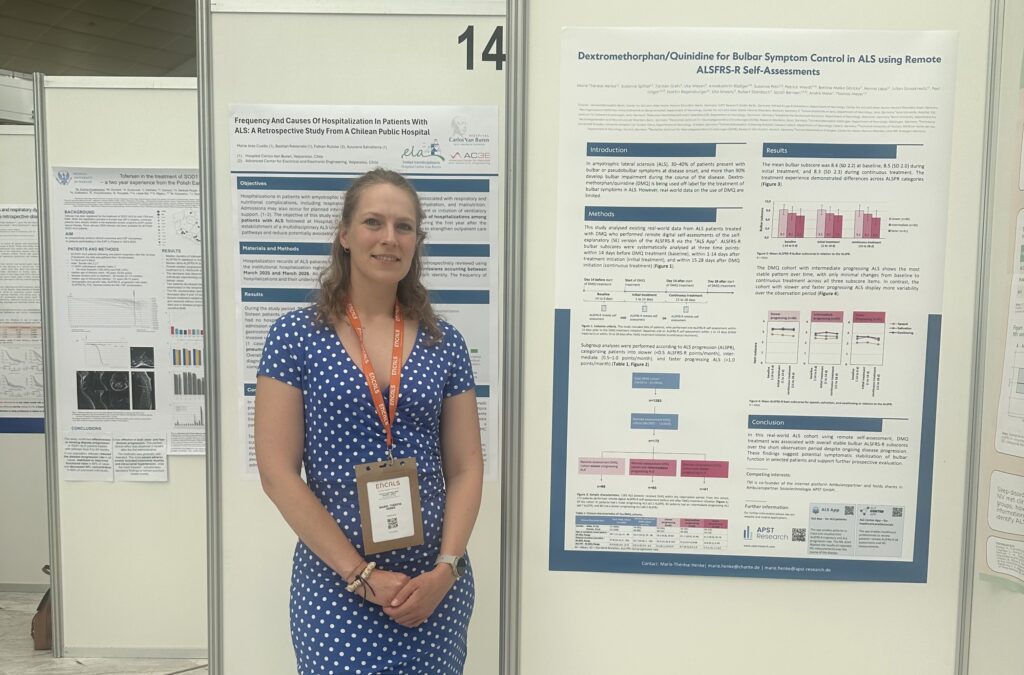
Under the title “Dextromethorphan/Quinidine for Bulbar Symptom Control in ALS Using Remote ALSFRS-R Self-Assessments,” data from clinical practice were analyzed. The focus was on how bulbar symptoms—particularly difficulties with speaking, swallowing, and salivation—evolve in everyday life during treatment with DMC.
The results show that treatment with DMC is associated with overall stable scores in the bulbar ALSFRS-R functional domains in this real-world cohort.
These observations provide important insights into the potential stabilization of bulbar functions and form the basis for further prospective studies. The study also highlights the value of digitally collected patient data: Through regular self-reports via the ALS app, treatment experiences in everyday life can be systematically recorded, and changes in symptoms over time can be better understood.
Poster presentation on the expectations of people with ALS regarding eye-tracking control systems for electric wheelchairs
Dr. Ronja Schiemann presented findings on the use of innovative eye-tracking glasses for complex electric wheelchairs among people with ALS.
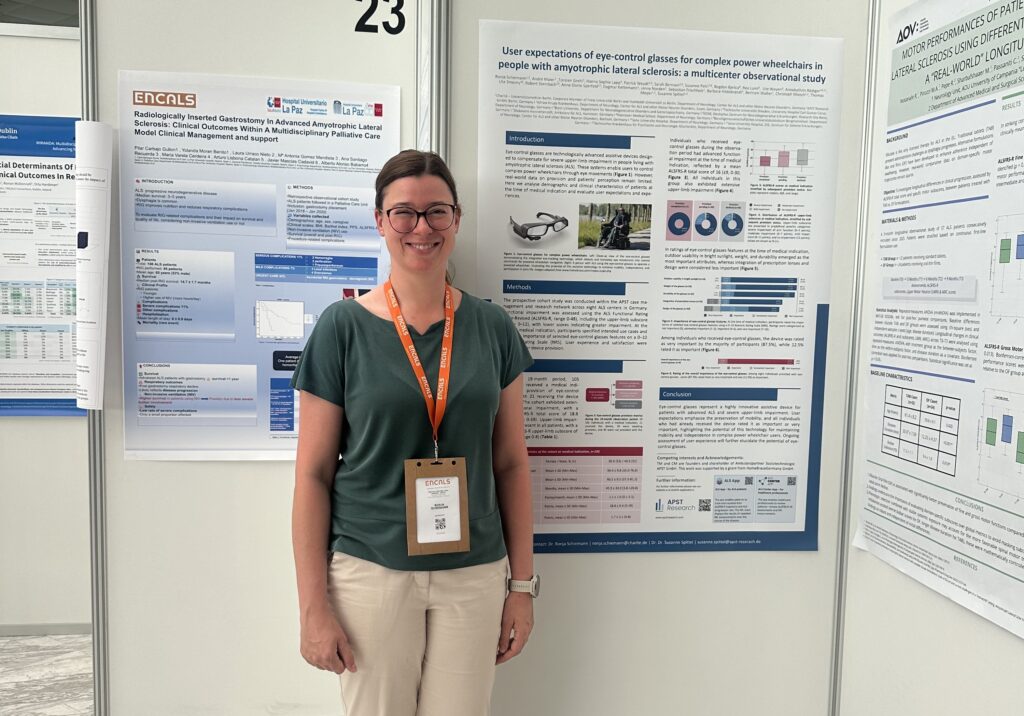
A study titled “User Expectations of Eye-Control Glasses for Complex Power Wheelchairs in People with Amyotrophic Lateral Sclerosis” examined the expectations and experiences of patients who were scheduled to receive or had already received eye-control glasses.
The results show that people with advanced ALS and significant limitations in arm function view the preservation of mobility and independence as particularly important benefits of this technology. In particular, outdoor use, light weight, and the reliability of the glasses were rated as important features.
All patients who had already been fitted with eye-tracking glasses and who participated in the survey rated this technology as important or very important. These initial findings highlight the potential of innovative assistive technologies to support the participation and independence of people with ALS in their daily lives.
Poster Presentation on Digital ALSFRS-R Self-Assessment Using the ALS App in Everyday Clinical Practice
Dr. Senthil Kumar Subramanian presented the latest findings on the long-term use of digital data collection for the ALS Functional Rating Scale (ALSFRS-R) via the ALS app.
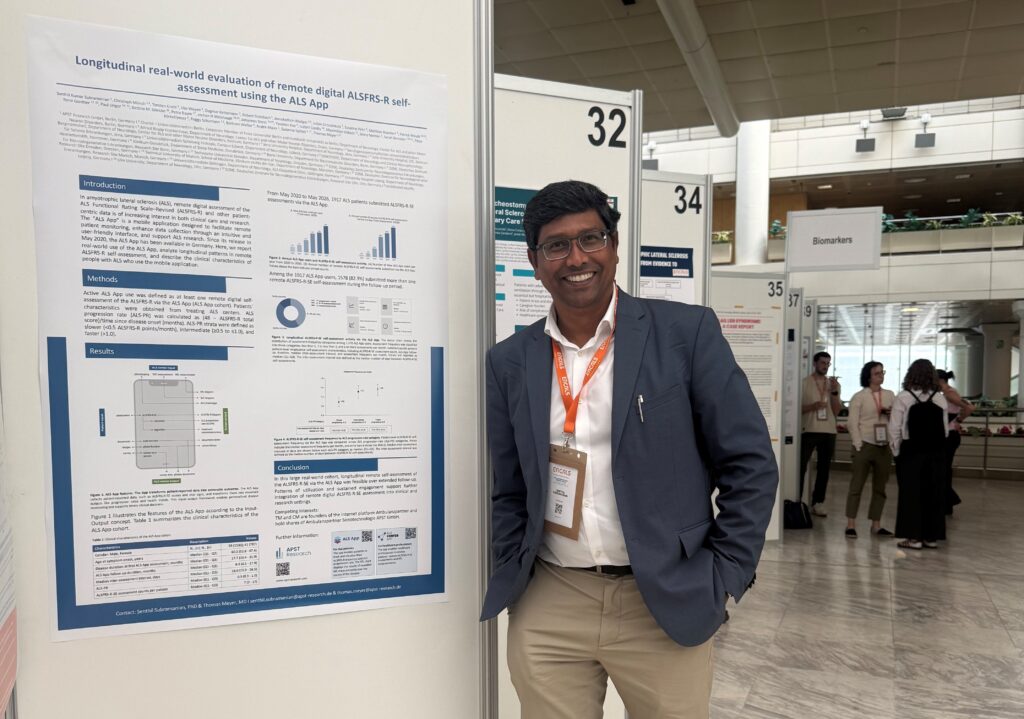
A study titled “Longitudinal Real-World Evaluation of Remote Digital ALSFRS-R Self-Assessment Using the ALS App” examined the use and scientific value of digital longitudinal documentation in people with ALS.
The analysis shows that the ALS app enables continuous tracking of the disease’s progression over an extended period of time and thus serves as an important complement to clinical examinations. Regular digital self-reports generate extensive data on the course of the disease from patients’ daily lives.
This data helps to better understand individual disease progression, identify changes at an early stage, and further develop the use of digital ALSFRS-R assessments in patient care and in future clinical trials.
The research presented at the 2026 ENCALS Meeting makes it clear that your data and experiences make an important contribution to ALS research.
Your regular contributions and participation in digital research projects generate valuable insights that are shared internationally and help improve our understanding of ALS and advance care for people with ALS.
Research is not only driven by new technologies and scientific analyses—it is made possible, above all, by the participation of patients.
We would like to extend our heartfelt thanks to all people living with ALS who support Ambulanzpartner through their participation and are thereby making an important contribution to future ALS research.
Warm regards,
Your Ambulanzpartner Team