




Publications
Muscle & Nerve, February 2026
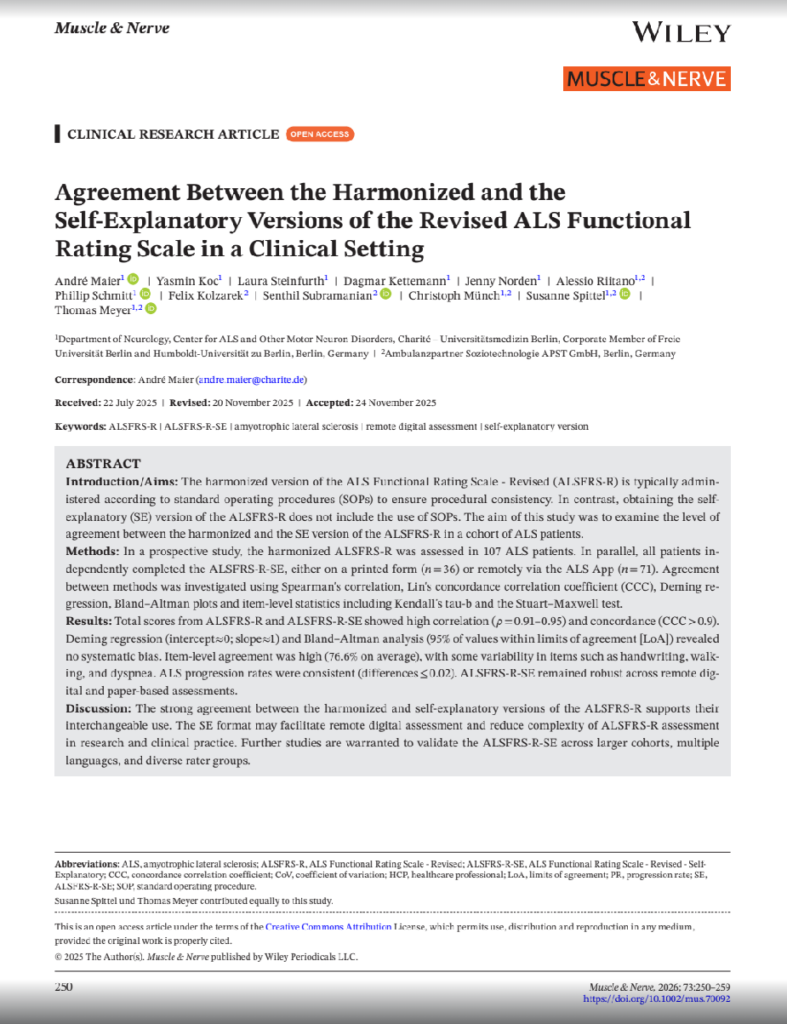
The study compared the standardized, interview-based ALSFRS-R with the self-administered ALSFRS-R-SE, which was completed by 107 ALS patients via an ALS app or on paper. Both methods showed very high agreement in total scores and progression rates, with no systematic deviations. The results support the use of the ALSFRS-R-SE as a reliable alternative, particularly for digital remote assessments and clinical trials.
Amyotrophic Lateral Sclerosis and Frontotemporal Degeneration, February 2026
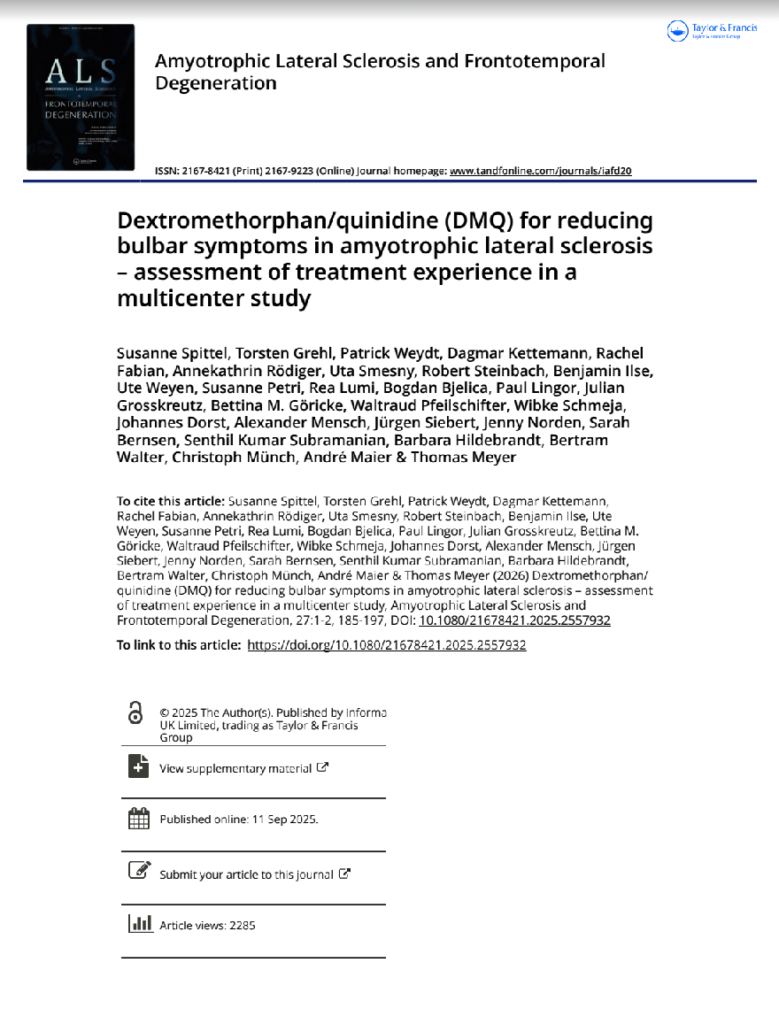
The multicenter study examined the experiences of 1,065 ALS patients with dextromethorphan/quinidine (DMC) for the treatment of bulbar symptoms such as speech and swallowing difficulties. 179 patients provided digital feedback on the treatment. Overall, the treatment experience was positive: the Net Promoter Score was +23, and approximately 80% of patients were satisfied. Patients with longer treatment durations and slower disease progression rated DMC particularly highly.
Amyotrophic Lateral Sclerosis and Frontotemporal Degeneration, January 2026
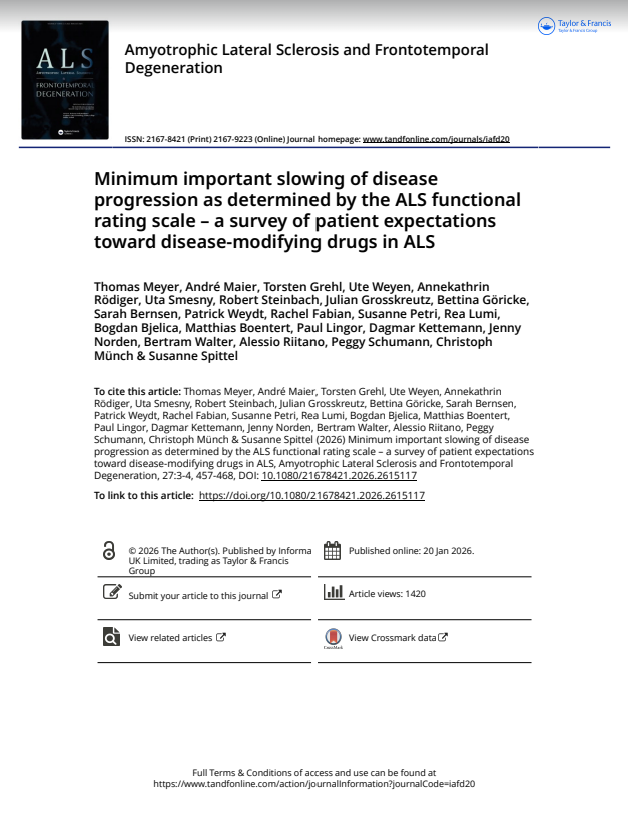
The study investigated what level of slowing of disease progression ALS patients consider relevant when using new medications. Of 522 respondents, 395 were able to provide an assessment. The median expected minimally significant slowing of progression was 20%. 36.9% considered a slowing of 5–10% significant. Patients with a faster disease course more frequently expected greater effects. The results can support patient-centered planning in future ALS studies.
Journal of Neurology, December 2025
In the hereditary form of amyotrophic lateral sclerosis (ALS), it was previously unknown how the neurofilament light chain (NfL) typically presents and progresses in affected individuals. Therefore, within a large cohort of 1,988 ALS patients, a smaller group with genetically caused ALS was examined in greater detail. NfL levels were measured in their blood. The results show that, depending on the specific genetic mutation involved (e.g., SOD1, FUS, or TARDBP), both the forms of the disease and the NfL levels differ. The study’s findings are important for better assessing the course of the disease, planning studies more effectively, and gaining a better understanding of the causes of ALS.
Amyotrophic Lateral Sclerosis and Frontotemporal Degeneration, August 2025
This study compared self-assessment using the ALS Functional Rating Scale (ALSFRS-R) via smartphone with clinical assessment. A total of 691 ALS patients who used the ALS app and 1,895 patients with clinical assessments were included. The study shows that data collection via the ALS app can serve as an additional tool in ALS research and clinical practice.
Scientific Reports, March 2025
In patients with amyotrophic lateral sclerosis (ALS), mechanical insufflation-exsufflation (MI-E) is used to treat cough insufficiency. Despite the perceived benefits, there are few systematic studies on the use of MI-E, symptom relief, or patient satisfaction. Ambulanzpartner coordinated this study, which was conducted from July 2018 to September 2023 at 12 German ALS centers.
Amyotrophic Lateral Sclerosis and Frontotemporal Degeneration, February 2025
Study on the Prevalence of Pathogenic SOD1 Gene Variants in an ALS Screening Program and the Clinical Practice of Transitioning to an Expanded Access Program (EAP) for Treatment with Tofersen. The detection of SOD1 variants in patients without a family history underscores the need for broad-based genetic screening for ALS. In cases of SOD1-ALS, the treatment option with Tofersen was predominantly utilized.
Muscle & Nerve, September 2024
This study examined clinical and patient-reported outcomes (PROs) as well as neurofilament light chain (NfL) levels in patients with SOD1-ALS during treatment with tofersen. The data show a significant decrease in NfL following tofersen treatment. The data support the response of NfL to tofersen treatment in SOD1-ALS. The PROs suggest a positive patient perception of tofersen treatment in clinical practice.
Neurological Research and Practice, August 2024
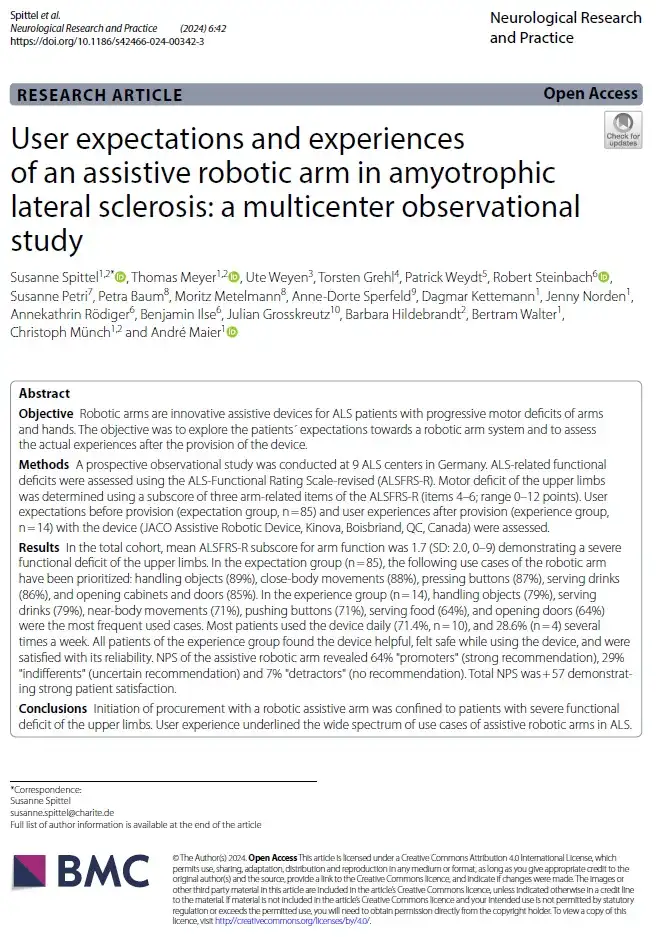
Publication of the results of our study on expectations regarding a robotic arm and actual experiences following the provision of the innovative robotic assistive device (digitROBOT) for amyotrophic lateral sclerosis (ALS). Users’ experiences highlight the wide range of potential applications for robotic arms in ALS. The positive user experiences and high levels of satisfaction demonstrate that robotic arms represent a valuable treatment option for ALS patients with severe motor deficits in their arms.
European Journal of Neurology, June 2024
This study demonstrates the association between ALS phenotypes and serum neurofilament light chain (NfL) levels, disease progression, and survival. ALS phenotypes have a significant influence on serum NfL levels and should be considered as an independent factor in NfL analyses in studies and in clinical practice.
Muscle & Nerve, March 2023
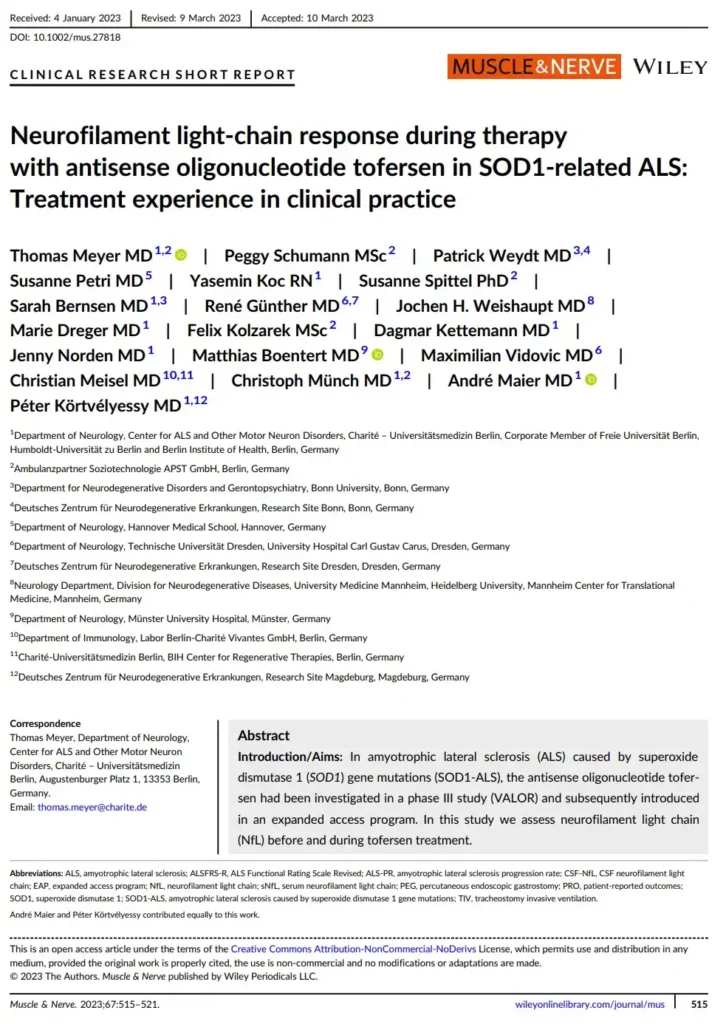
This study examined neurofilament light chain (NfL) levels in patients with SOD1-ALS before and during treatment with Tofersen. The data show a significant decrease in NfL following Tofersen treatment. The response of NfL to Tofersen treatment supports the hypothesis that Tofersen influences the course of ALS.
European Journal of Neurology, March 2023
A study involving 14 ALS outpatient clinics examined the diagnostic value of serum neurofilament light chain (sNfL) in ALS across a broad spectrum of disease courses in terms of disease progression and duration.
Amyotrophic Lateral Sclerosis and Frontotemporal Degeneration, August 2022
Publication on the use of the ALS Functional Rating Scale (ALSFRS-R) via a web portal or the ALS app. The study analyzed data from 620 people with ALS who completed the ALS Functional Rating Scale digitally. The result was impressive: those affected completed the ALS Functional Rating Scale digitally 9.6 times per year.
Scientific Report, June 2022
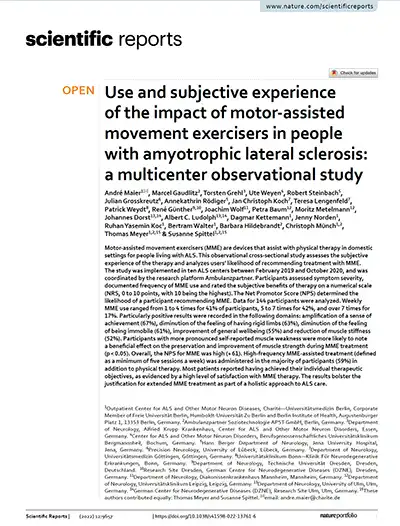
Publication of the results of our study on the benefits of therapeutic exercise trainers (digitTHERA) for amyotrophic lateral sclerosis (ALS). Between February 2019 and January 2021, data from 144 people with ALS who use an exercise trainer were collected and analyzed at 10 ALS centers in Germany.
European Journal of Neurology, August 2021
In this study, 151 adult patients with 5q-SMA, representing a wide range of ages, disease duration, and motor function deficits, received nusinersen. Expectations regarding treatment with nusinersen varied widely and were related to disease severity and the pattern of symptoms and impairments. The majority of patients experienced relief from symptoms and motor deficits that was rated as mild or moderate. Despite the relatively modest extent of the perceived functional improvements, treatment satisfaction was high and recommendation rates were excellent.
Electronic Markets, March 2021
Freie Universität Berlin, the University of Münster, and the Einstein Center Digital Future have conducted research on our digital service and research platform. The results have been published in a paper intended for an international audience.
Journal of Neurology, Neurosurgery, and Psychiatry, April 2020
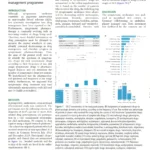
A scientific study of symptomatic treatment with medications for amyotrophic lateral sclerosis (ALS). The study analyzed data from 2,392 people with ALS who participated in our digitally supported medication management program.
BMC Neurology, September 2019
In this study involving 37 patients with ALS, THC:CBD was used across a wide range of doses to treat spasticity. The data suggest that the medication was administered based on the patients’ individual needs and preferences. Overall satisfaction with THC:CBD treatment was high. The results indicate that THC:CBD is a valuable addition to the range of symptomatic therapies for spasticity in people with ALS.
JMIR Rehabilitation and Assistive Technologies, November 2018
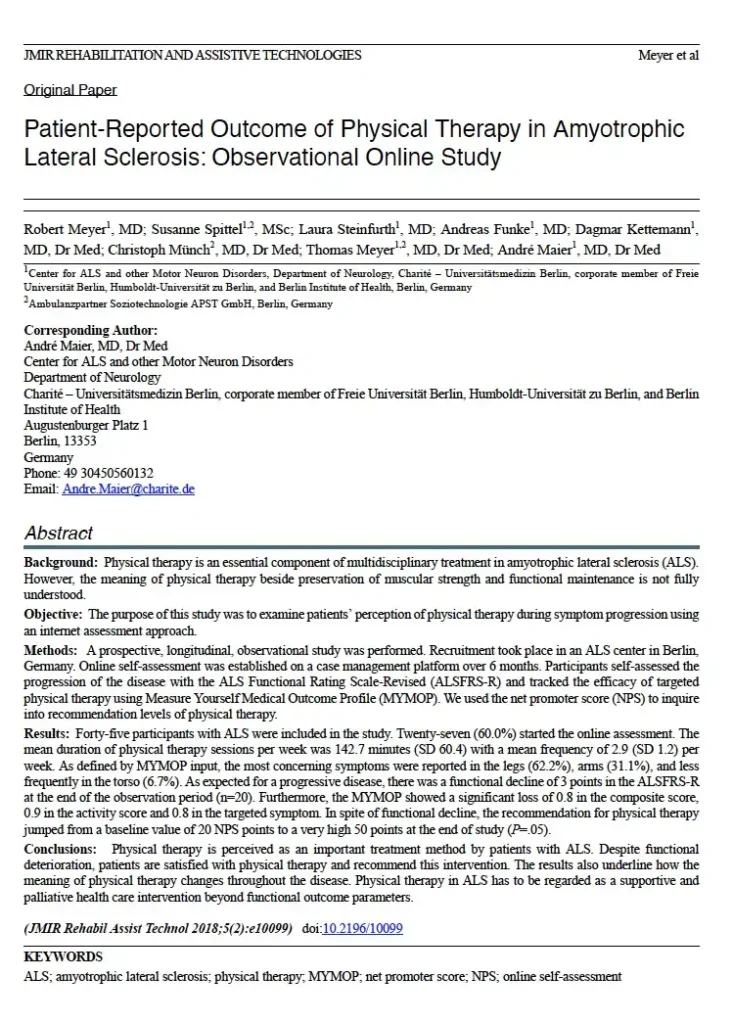
We surveyed 256 people with ALS between July 2014 and August 2017 regarding their access to medical treatments. Analysis of the data shows that ALS patients’ satisfaction with physical therapy, occupational therapy, and speech therapy is generally high.
Amyotrophic Lateral Sclerosis and Frontotemporal Degeneration, August 2018
The provision of assistive devices at 12 leading German ALS centers was evaluated over a four-year period. Data from 1,494 ALS patients, representing 11,364 instances of assistive device provision, were analyzed using the Ambulanzpartner care platform.
NeuroTransmitter, January 2016
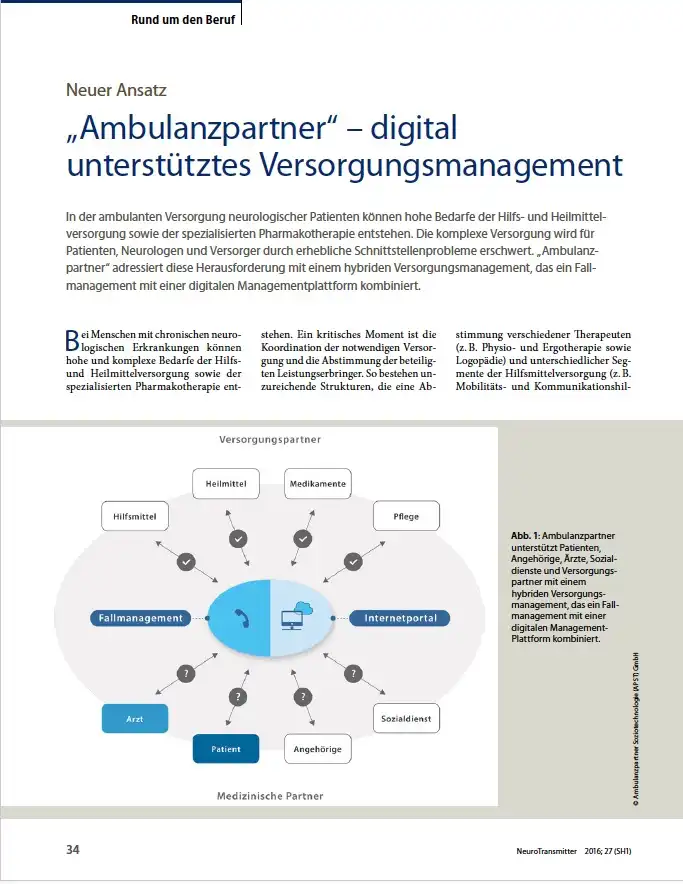
NeuroTransmitter serves as a discussion forum and a leading professional policy publication for neurologists and psychiatrists in Germany. With this article, we aim to provide comprehensive information and foster a solid understanding among outpatient care partners within our target audience.
Neurologist, August 2015
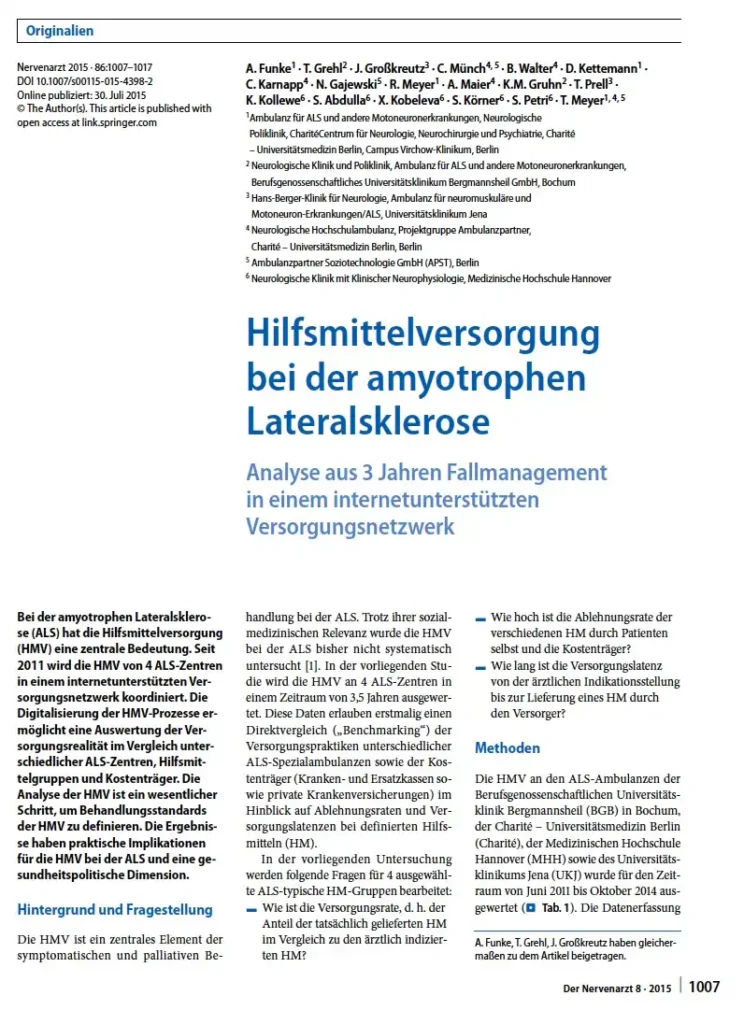
An initial scientific analysis of aggregated care data from the Ambulanzpartner network. For the first time, data from digitized care processes provide an independent, direct comparison of health insurance plans’ benefits in the area of assistive devices for people with ALS.
Clinical Neurophysiology, June 2013
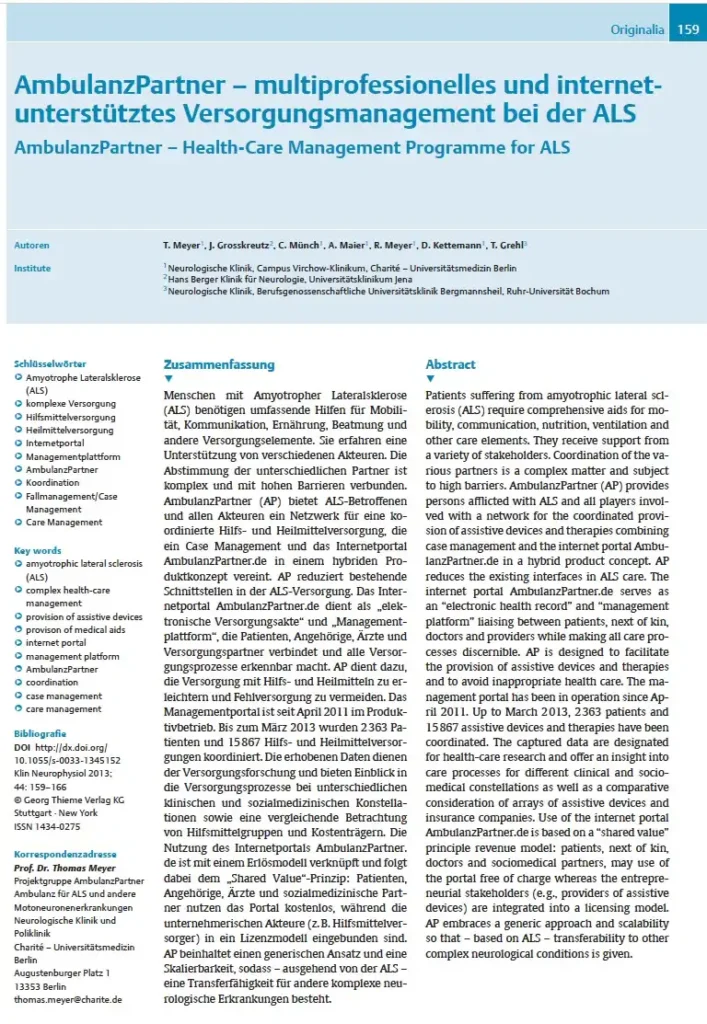
The journal “Clinical Neurophysiology” is aimed at neurophysiologists, neurologists, neurosurgeons, and neurologists working in hospitals and private practices. The article provides a detailed description of “Ambulanzpartner” using the example of care for people with amyotrophic lateral sclerosis (ALS).